
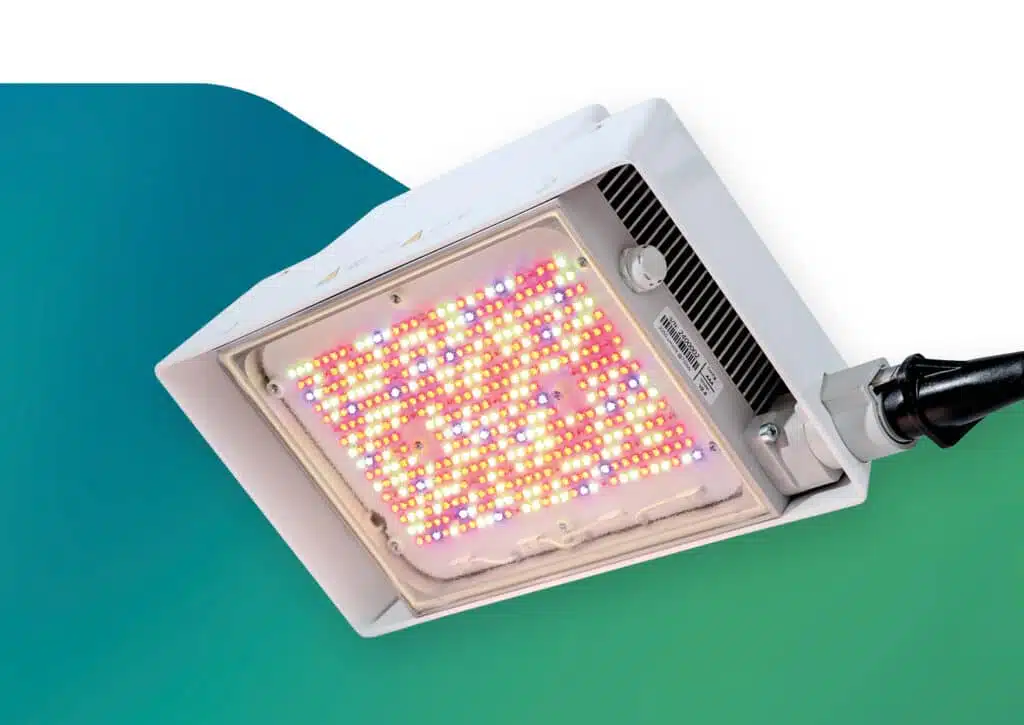
Climalux using the Horti Lighting Protocol

The horti lighting protocols are designed to create a universal language for greenhouse equipment, particularly dimmable LED lighting and climate computers, enabling them to communicate in a plug-and-play manner. This standardizes communication, reduces implementation costs, and helps growers optimize their operations.

For this application, Climalux uses the specially developed Horticulture Control Unit (HCU), which can be connected to any climate computer, such as those from Priva, Hoogendoorn, Ridder, or Hortimax. The HCU can also be operated manually using physical buttons or touchscreens. Monitoring the lights is also possible, and in the event of an emergency, remote intervention and adjustments can be made quickly.

The lights can be easily controlled analogously or digitally, and in various ways as desired. This can be done, for example, per department, allowing for different variables to be applied to each department, such as light intensity, color, etc.

All Climalux grow lights consist of a dimmable lighting unit and a vertical ventilation system, ensuring even heat and humidity distribution throughout the greenhouse. This system not only effectively cools the LEDs but also circulates the air at least four times per hour.

Gain insight into your specific lighting needs

The latest news from Climalux

Climalux simplifies the transition to LED lighting in 2027

SON-T lamps are being phased out and will soon no longer be permitted for sale due to stricter European regulations concerning the environment, toxic substances, and energy efficiency. Growers currently using these lamps are therefore required to switch to new LED lighting. In response, Climalux has developed a new power supply unit (PSU) that eliminates the need for any changes to existing (power) cabling.

Extremely high bell pepper yield of 47 kg per m² due to artificial lighting

At a Climalux trial site, a yield of 47 kg of red bell peppers was achieved in 2025 on an area of ​​40 m². It is expected that the yield on larger areas can be even higher, as the current status (week 13, 2025) has already yielded 20.5 kg.