
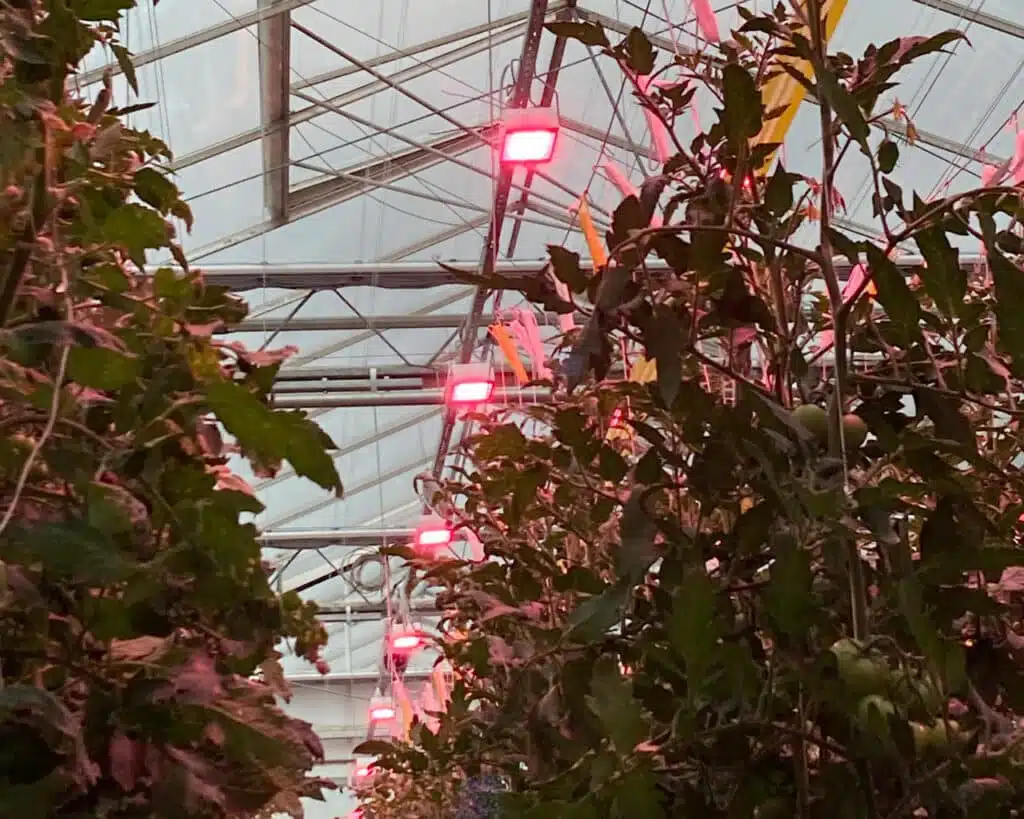
30% energy savings with Climalux grow lamp

In a trial of full-led grow lights from Climalux, conducted by HortiTech at research center PROOF with the tomato variety Martice on rockwool, it was shown that the Climalux grow light system resulted in savings of over 30% compared to the reference department with the same electricity consumption, light intensity and similar light spectrum.

In addition to energy savings, higher water and nutrient uptake was observed, which affected plant growth. Plants in the Climalux section were found to be stronger, fuller and more vigorous than in the reference.

For comparison, LED lamps with identical color spectrum and electric power were hung in the reference ward. Both departments were equipped with the same technology. With the climate settings, watering and planting operations, an identical crop was aimed for in both departments. Planting measurements started in week 46 and were conducted weekly. Leaf samples were also taken for understanding nutrient uptake.

All of Climalux’s grow lights are composed of a dimmable lighting unit and a vertical ventilation system, which distributes heat and moisture evenly throughout the greenhouse. This system not only effectively cools the LEDs, but also moves the air about four times per hour.

For the full test report, click here.

Gain insight into your specific lighting needs

The latest news from Climalux

Climalux simplifies the transition to LED lighting in 2027

SON-T lamps are being phased out and will soon no longer be permitted for sale due to stricter European regulations concerning the environment, toxic substances, and energy efficiency. Growers currently using these lamps are therefore required to switch to new LED lighting. In response, Climalux has developed a new power supply unit (PSU) that eliminates the need for any changes to existing (power) cabling.

Extremely high bell pepper yield of 47 kg per m² due to artificial lighting

At a Climalux trial site, a yield of 47 kg of red bell peppers was achieved in 2025 on an area of ​​40 m². It is expected that the yield on larger areas can be even higher, as the current status (week 13, 2025) has already yielded 20.5 kg.